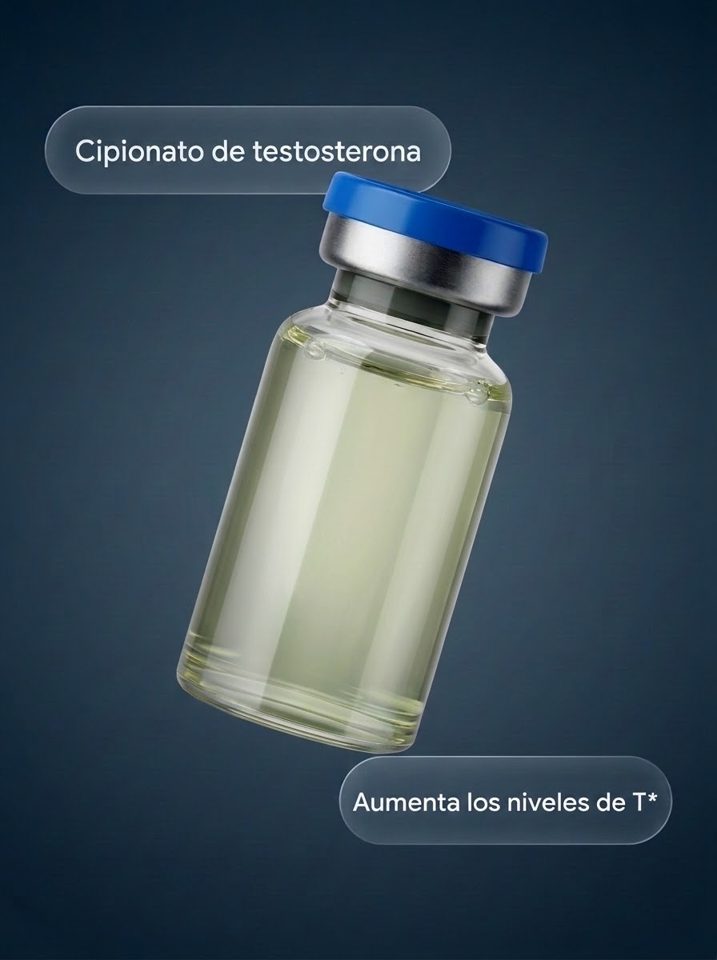
The active ingredient
Testosterone cypionate is an injectable form of testosterone used for replacement therapy.

Injectable medicine for human use. Your doctor checks the quantity on your prescription before the order ships.
Follow the dose, route and schedule on your prescription and the dispensed leaflet.
Testosterone cypionate is an injectable form of testosterone used for replacement therapy.

Correct the deficiency and treat symptoms of hypogonadism. Individual response varies.
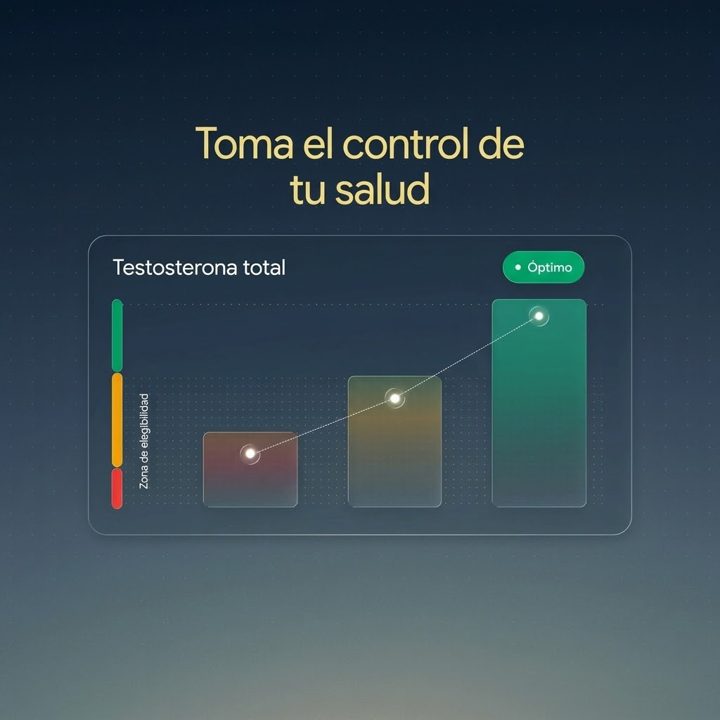
Follow-up checks review your symptoms, testosterone levels and possible side effects.
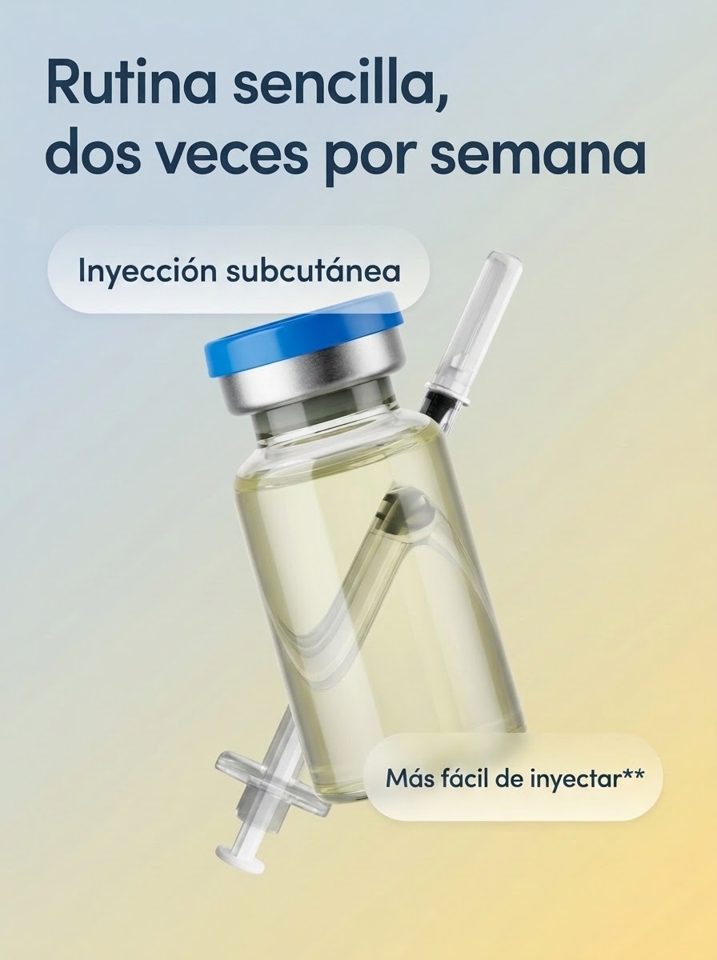
Confirm dose, route and schedule with your prescription and the dispensed product's instructions.
Images illustrate treatment. Follow your prescription and your check-ups to judge the response.
TRT is safe when it is monitored. These are the effects your doctor watches, and what to do about each.
Your monitoring plan
It can rise. It is measured at every check-up.
Blood can thicken. Above 54%, therapy is paused.
It lowers sperm production. If you want children, discuss it first.
Mild swelling in ankles or hands. Tell your doctor if it appears.
Call 9-1-1 or go to the nearest emergency department.
Sources: Endocrine Society 2018 · TRAVERSE 2023 · MedlinePlus
Average times from the clinical trials. Your own response may vary.
 3 wks
 3–6 wks
mood
Improvements in depressive symptoms and quality of life appear between weeks 3 and 6.[4]
 ≤ 6 mo
 12–16 wks
body
Body composition changes from weeks 12–16, continuing up to 6–12 months.[4]
 6+ mo
6+ mobone
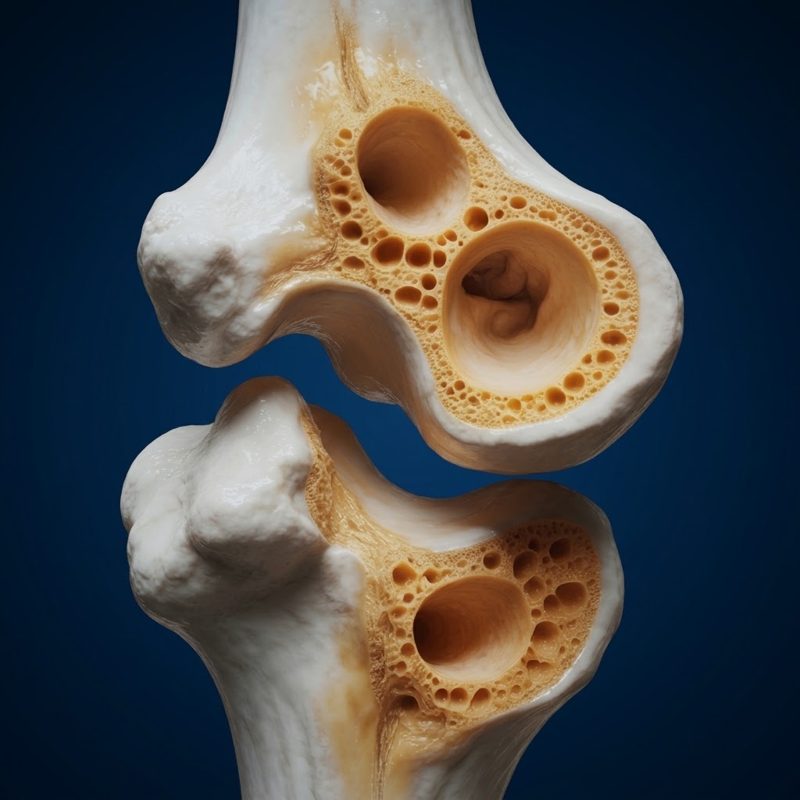
Bone mineral density rises after 6 months; in the TTrials it improved at 12 months.[5]
Another question? Your medical team answers on WhatsApp.
The Endocrine Society guideline recommends diagnosing hypogonadism only with consistent symptoms and low total testosterone on at least two fasting morning measurements.[1]
In TRAVERSE, a trial of 5,246 men aged 45–80 with cardiovascular risk, TRT did not increase major adverse cardiac events versus placebo (HR 0.96) over about 22 months of average treatment.[2]
TRAVERSE found more atrial fibrillation (3.5% vs 2.4%), acute kidney injury (2.3% vs 1.5%) and pulmonary embolism (0.9% vs 0.5%) with testosterone than placebo.[2]
The guideline recommends checking testosterone and hematocrit at 3–6 months and then yearly, targeting the mid-normal range; if hematocrit exceeds 54%, therapy is paused until it falls.[1]
Yes. External testosterone suppresses sperm production. The guideline advises against TRT in men planning a pregnancy soon.[1]
In the Testosterone Trials (790 men ≥65), TRT moderately improved sexual function, mood and depressive symptoms, but not vitality. It also corrected anemia and increased bone density.[3]
The guideline advises against it with prostate or breast cancer, unevaluated prostate nodule, unexplained elevated PSA, high hematocrit, untreated severe sleep apnea, uncontrolled heart failure, or heart attack or stroke in the past 6 months.[1]
No. 200 mg/mL is the amount per milliliter. Your dose, volume and schedule are on your prescription.[7]
Ask your care team when to resume. Do not double the dose.[7]
After the final medical review. An agent sends you a payment link via WhatsApp.[0]